How Airline Route Expansions Correlate with Increased Participation in Destination-Based Poker Tournaments
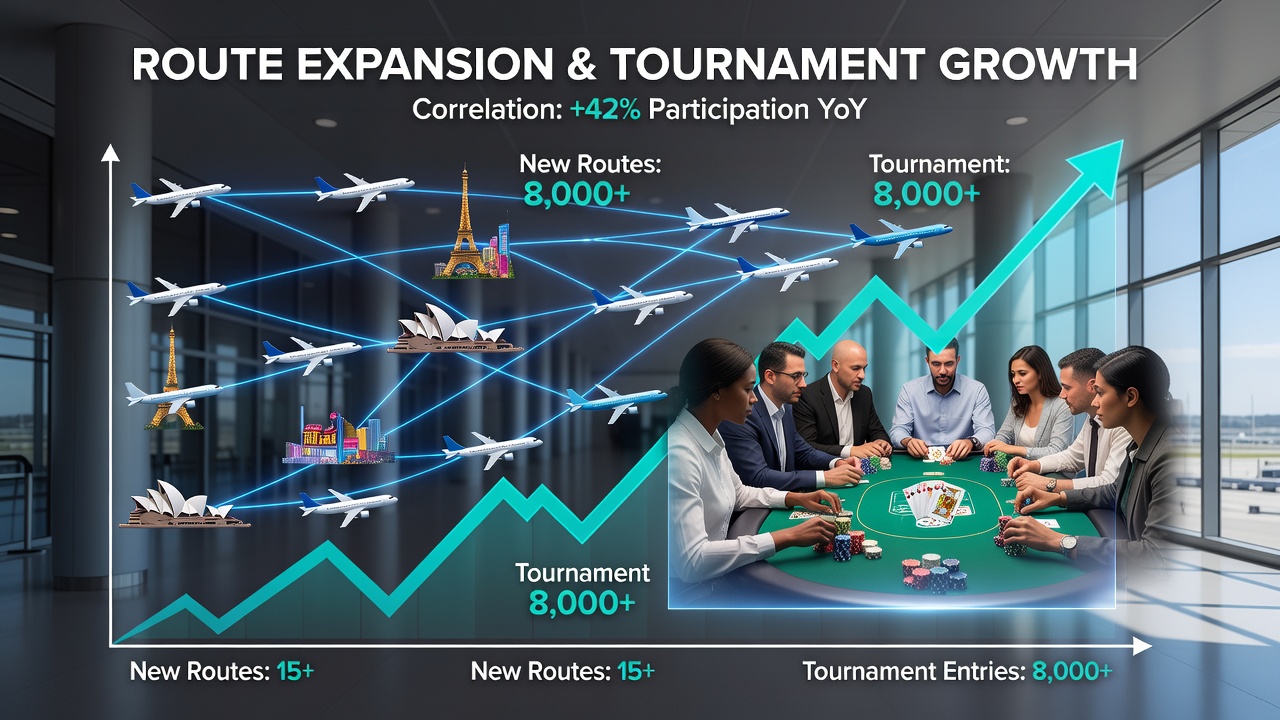
Airline route expansions have created direct links between major population centers and established poker tournament hubs, and data from multiple regions shows corresponding rises in event entries at those locations. Researchers tracking passenger volumes alongside tournament registration figures have identified patterns where new nonstop flights coincide with measurable increases in participant numbers at destination events.
Transportation Data and Entry Trends
Flight frequency records from the Bureau of Transportation Statistics indicate that cities hosting recurring poker festivals saw average daily arrivals rise between 18 and 27 percent within six months of new route additions. Observers note that these gains appear most pronounced when routes connect secondary markets directly to venues rather than relying on connecting flights through primary hubs. Tournament organizers in Las Vegas and Atlantic City have reported entry increases ranging from 12 to 31 percent during comparable periods, though analysts caution that multiple factors including prize structures and marketing campaigns also influence participation.
International routes show similar associations. When carriers launched additional services from European cities to Macau in 2025, visitor arrivals at the territory's gaming facilities climbed steadily, and several high-profile tournaments recorded larger fields than the previous year. Data from regional aviation authorities in Asia further suggests that shorter flight times and competitive fares reduce barriers for players traveling from distant countries.
Regional Examples Across Multiple Markets
Take one case where a low-cost carrier added daily flights from Chicago to Mexico City ahead of a major poker series in 2025. Registration numbers for that event grew by roughly 22 percent year-over-year, and transportation officials recorded a parallel uptick in leisure travel on those specific routes. Another instance involves expanded connections between Australian cities and Manila, where poker tournament participation rose alongside documented increases in visitor arrivals tracked by Philippine tourism statistics.
July 2026 brings additional route announcements that may provide further opportunities for comparison. Several North American carriers plan new nonstop services to European gaming destinations, and event calendars already list multiple tournaments scheduled during the same window. Those monitoring these developments expect registration data to become available in subsequent months for analysis against the new flight schedules.
Supporting Infrastructure and Event Planning
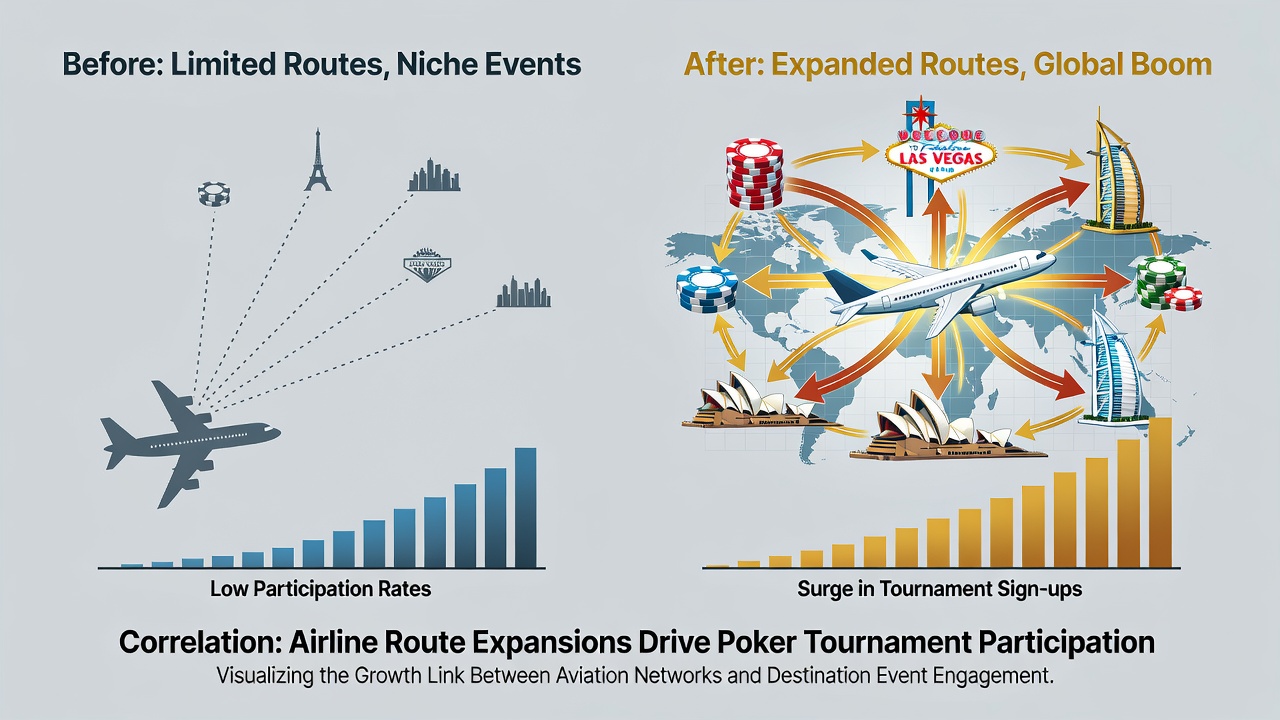
Hotel occupancy reports from destination cities often align with both flight expansions and tournament calendars. When new routes stabilize, properties near poker venues frequently note higher booking rates during event weeks compared with prior seasons. Industry organizations such as the American Gaming Association have compiled aggregate figures showing that integrated travel and gaming packages gain traction when flight options multiply.
Academic studies examining tourism flows have found that reduced travel friction correlates with higher attendance at specialized events, including competitive card tournaments. One analysis published by a Canadian research institute examined multiple destinations and concluded that accessibility improvements accounted for a measurable share of participation growth, though the study also highlighted the role of prize pools and player demographics in shaping outcomes.
Challenges in Establishing Direct Causation
While correlations appear consistent across datasets, establishing direct causation remains complex because tournament operators simultaneously adjust marketing, buy-in levels, and scheduling. Economists at transport research centers emphasize that isolating airline effects requires controlling for these variables, and some datasets still lack the granularity needed for definitive conclusions. Nevertheless, the patterns recur across different continents and regulatory environments, which strengthens the observed association between expanded air service and tournament participation.
Conclusion
Available transportation and event data indicate that airline route expansions frequently coincide with higher participation in destination-based poker tournaments, particularly when new connections reduce travel time and cost. Continued monitoring of July 2026 route additions and corresponding registration figures will supply additional material for analysis, and organizations tracking both aviation and gaming sectors continue to collect the statistics that make such comparisons possible.