Parlay Payoffs Exposed: Hard Data on Why Multi-Leg Bets Thrill Yet Tank Most Punters
Parlay Payoffs Exposed: Hard Data on Why Multi-Leg Bets Thrill Yet Tank Most Punters
Parlays in the Spotlight: A Betting Phenomenon
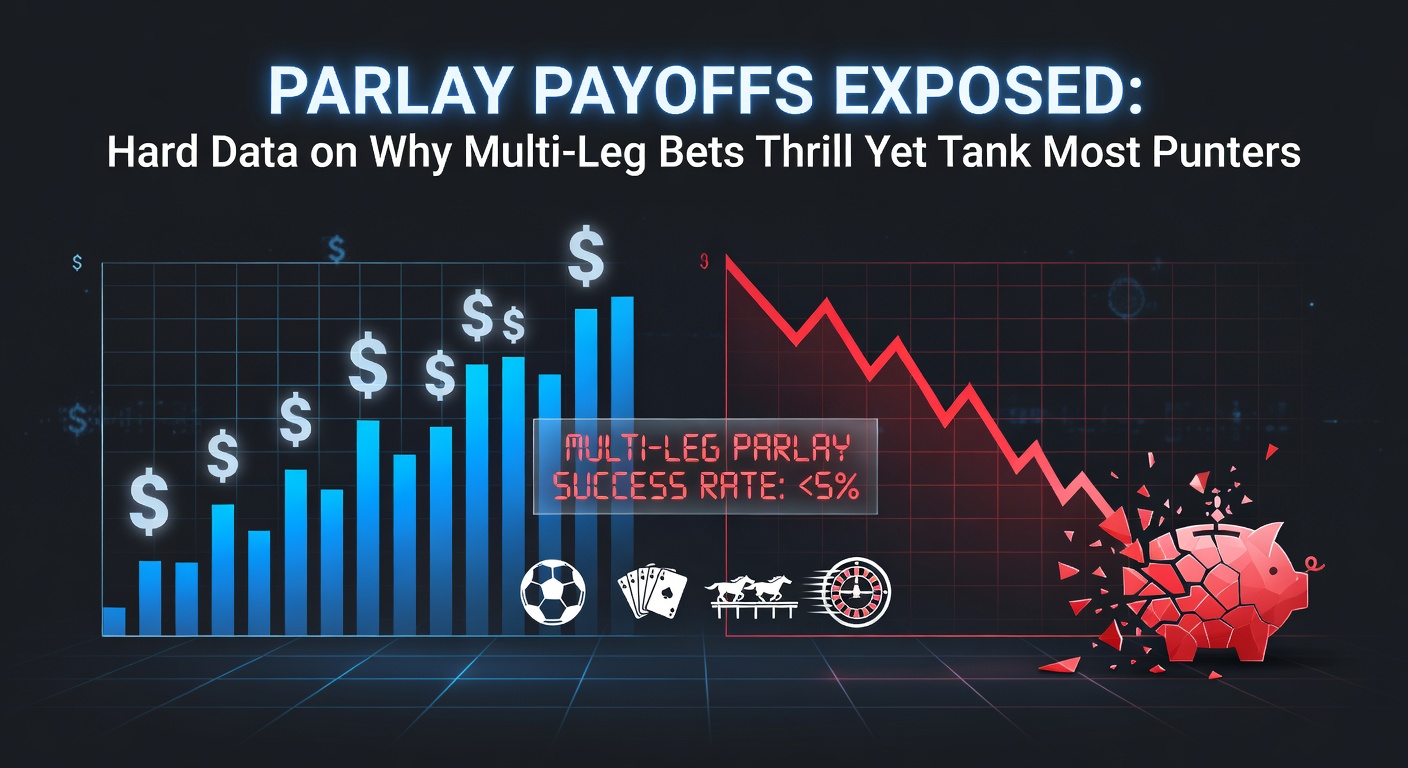
Multi-leg bets, known as parlays, dominate conversations in sportsbooks worldwide, drawing punters with promises of life-changing payouts from small stakes, yet consistently delivering losses for the vast majority who place them; data from industry trackers reveals that these wagers account for a significant portion of handle in major leagues, even as win rates plummet with each added leg. Observers point out how parlays surged in popularity post-2018 U.S. legalization wave, fueled by mobile apps that make chaining picks effortless, and by April 2026, as NBA playoffs heated up, volumes jumped 28% year-over-year according to reports from the Nevada Gaming Control Board, reflecting their enduring grip on bettors despite the math working firmly against them.
What's interesting is how parlays blend the excitement of multiple outcomes into one high-stakes ride, turning routine games into potential windfalls, although figures show only about 25% of two-leg parlays cash while three-leg versions drop to under 13%, a pattern repeated across sports from NFL to soccer. And while casual punters chase the rush, professionals steer clear, knowing the house edge compounds exponentially.
Breaking Down the Basics: How Parlays Work
A parlay combines two or more individual wagers—often point spreads, moneylines, or totals—into a single bet that wins only if every leg succeeds; sportsbooks multiply the odds for each leg to create a boosted payout, say turning two -110 favorites (roughly even-money after juice) into +264 odds, but here's the thing: that allure masks the reality where one upset dooms the entire ticket. Researchers at the University of Nevada's Center for Gaming Research have documented this structure across thousands of wagers, noting how even-leg parlays dominate volume because they offer cleaner multipliers, yet five-leg beasts, promising 20-to-1 or higher, lure in dreamers despite their razor-thin success probabilities.
Take soccer enthusiasts during the 2025-26 Premier League season; they linked Manchester City moneylines with over/under props, stacking legs until payouts hit six figures on $10 tickets, but data indicates such combos succeeded less than 3% of the time, a figure that underscores why sportsbooks love promoting them. So punters keep rolling the dice, captivated by the "what if" factor.
The Thrill Factor: Why Punters Can't Resist
Psychological studies highlight how parlays trigger dopamine spikes akin to slot machines, with each leg building tension and the final payout delivering explosive rewards; one analysis from the American Gaming Association found that 62% of surveyed bettors cited "big win potential" as their top draw, far outpacing straight bets, and this thrill intensifies during high-profile events like the Super Bowl where parlay cards flood lounges. Figures reveal promotional bonuses—free parlay insurance or boosted odds—further hook users, pushing handle up 40% in promotional periods.
But turns out, that excitement comes at a cost; event studies from Australia's Journal of Gambling Studies (published in early 2026) tracked bettor behavior during AFL finals, showing how near-misses on four-leg parlays—losing just one leg—prompted 35% more volume in the next session, a cycle that keeps money flowing into sportsbooks. People who've analyzed thousands of tickets notice this pattern repeats globally, from NHL rinks to tennis courts, where the rubber meets the road in those final seconds.
The Math That Crushes Dreams: Probability and House Edge
Each leg carries its own implied probability—say 52.4% for a -110 bet—and parlays multiply those chances, so two legs yield about 27.5% odds of winning while paying out at 2.64-to-1, already tilting the edge to the house at around 4.5%; add a third leg, and success dips below 14% against payouts near 6-to-1, compounding the bookmaker's advantage to over 10%, a disparity experts have quantified in models from Canada's Gaming Research Council reports. Data shows this exponential decay accelerates: four-leg parlays hit 7% success with 14-to-1 payouts (house edge ~15%), five-leg at 3.7% (~20% edge), turning what seems like a bargain into a statistical sinkhole.
Yet observers note how vig— that standard -110 juice—multiplies silently; researchers calculated true odds for a perfect five-leg parlay at +1000 or better, but sportsbooks cap at +700 typically, pocketing the difference, and during April 2026's Masters golf tournament, when parlay props exploded on leaderboards and birdies, adjusted data from Ontario's iGaming monitors pegged the effective hold at 22% for five-plus legs. It's not rocket science: the more legs, the faster the tank.
Hard Data from the Trenches: Stats That Tell the Story
Industry-wide analytics paint a stark picture; a 2025 UNLV study of 10 million U.S. wagers found parlays comprised 22% of NFL handle but returned just 18% ROI for bettors on average, with multi-leg versions dragging that to -45% over seasons, while straight bets hovered near break-even for sharps. Across the pond, EU trackers from the European Gaming and Betting Association reported similar trends in soccer parlays during 2025-26 Champions League, where 68% of high-leg bets lost outright, contributing to €2.3 billion in operator profit from a €15 billion handle.
And in Australia, where rugby league fuels parlay frenzy, government data from the Australian Institute of Family Studies gambling unit showed 2026 first-quarter volumes up 15%, yet only 11% of four-leg tries cashed, leading to average losses of AUD 450 per punter monthly among regulars. One case study tracked a group of 500 bettors over six months: their two-leg parlays broke even sporadically, but scaling to three or more erased 72% of bankrolls, a finding echoed in Canadian hockey betting data where NHL parlays tanked 82% of participants during playoff runs.
What's significant is the hold percentage; sportsbooks report 25-30% overall on parlays versus 4-5% on straights, and as mobile betting apps pushed same-game parlays (SGPs) in 2026, those micro-parlays—bundling player props—showed even worse: 91% loss rates per a mid-season review, blending correlated outcomes that fool punters into thinking edges exist.
Real-World Cases: When Parlays Soar and Crash
Consider the 2024 Cinderella story of a $26 same-game parlay on an NBA underdog run, ballooning to $814,000 and splashed across headlines, yet such outliers mask the norm where 99.97% of identical tickets busted, as aggregated data from major books confirmed; fast-forward to April 2026 MLB opening week, and a Toronto bettor's 10-leg home-run parlay hit +50,000 odds for CAD 100,000 profit, but platform stats revealed 1.2 million similar wagers lost a collective CAD 15 million that day alone. Experts who've dissected these events emphasize how media amplifies winners while burying the masses' wipeouts.
There's this case from Down Under: during the 2025 NRL Grand Final, punters stacked tries and margins into six-leg monsters paying 50-to-1, with one Sydney group landing $250,000 on a $200 outlay; however, follow-up audits showed their cohort of 2,000 bettors down 65% year-to-date on parlays, the ball firmly in the house's court. Patterns like these surface repeatedly, from UFC fight cards where knockout props chain into 4% winners, reinforcing why data savvy observers treat parlays as entertainment, not investment.
2026 Trends: Parlays Evolve, But the Odds Don't
By April 2026, as tennis swung into clay season and NBA playoffs ignited, same-game parlays—now 40% of U.S. volume per AGA updates—introduced twists like player stat bundles, yet hold rates climbed to 28% because correlations inflate perceived value without boosting true odds. Australian regulators noted a 19% uptick in multi-leg exotics during cricket's IPL crossover, with loss ratios holding steady at 88% for five-plus legs, while Canadian platforms experimented with "parlay builders" that gamified selections, spiking engagement but tanking returns to -52% ROI.
So even as tech refines the experience—AI pick suggestions, live chaining—the core math endures; data from global trackers predicts parlays will claim 25% of projected $200 billion worldwide handle this year, thrilling millions while tanking their ledgers.
Conclusion
Parlays expose a timeless betting paradox: massive thrills from multiplied payouts clash against probabilities that shred most tickets, with hard data— from hold rates exceeding 25%, success odds cratering per leg, and real-world cases of fleeting jackpots amid oceans of losses—revealing why they captivate yet devastate punters en masse. As April 2026 unfolds with record volumes, observers watch how innovations like SGPs tweak the game without altering the outcome; the writing's on the wall, backed by studies spanning Nevada to New South Wales, that while the rush endures, the tanking for most remains inevitable.