Patterns Linking Municipal Noise Ordinances to Adjustments in Evening Poker Session Timings Within City-Center Gaming Venues
 Municipal noise ordinances in many downtown districts have created measurable shifts in how city-center gaming venues schedule their evening poker sessions, and observers note these adjustments often follow specific patterns tied to local enforcement timelines. Cities enforce decibel limits after certain hours to reduce residential disturbances, which forces operators to recalibrate start times, session lengths, and even table configurations without disrupting overall participation rates. Research indicates venues respond by moving peak poker activity earlier in the evening or extending it past midnight when ambient noise thresholds rise again.
Background on Noise Regulations and Gaming Operations
Noise ordinances typically set maximum sound levels between 10 PM and 7 AM in mixed-use urban zones, and gaming venues must comply through structural modifications or schedule changes. Data from multiple North American and Australian municipalities shows poker rooms experience the strongest pressure because tables generate sustained conversation and chip sounds that carry through building structures. Venues in Toronto adjusted several evening tournaments by 45 minutes earlier after 2025 updates to the municipal code, while similar venues in Melbourne shifted late-night cash games to conclude by 11 PM to avoid fines.
Operators track these requirements through compliance software that logs ambient readings at property boundaries, and patterns emerge when ordinances tighten during summer months when windows stay open longer. June 2026 marks the rollout of revised enforcement protocols in several mid-sized U.S. cities, prompting preemptive timetable revisions at downtown properties.
Observed Timing Adjustments Across Venues
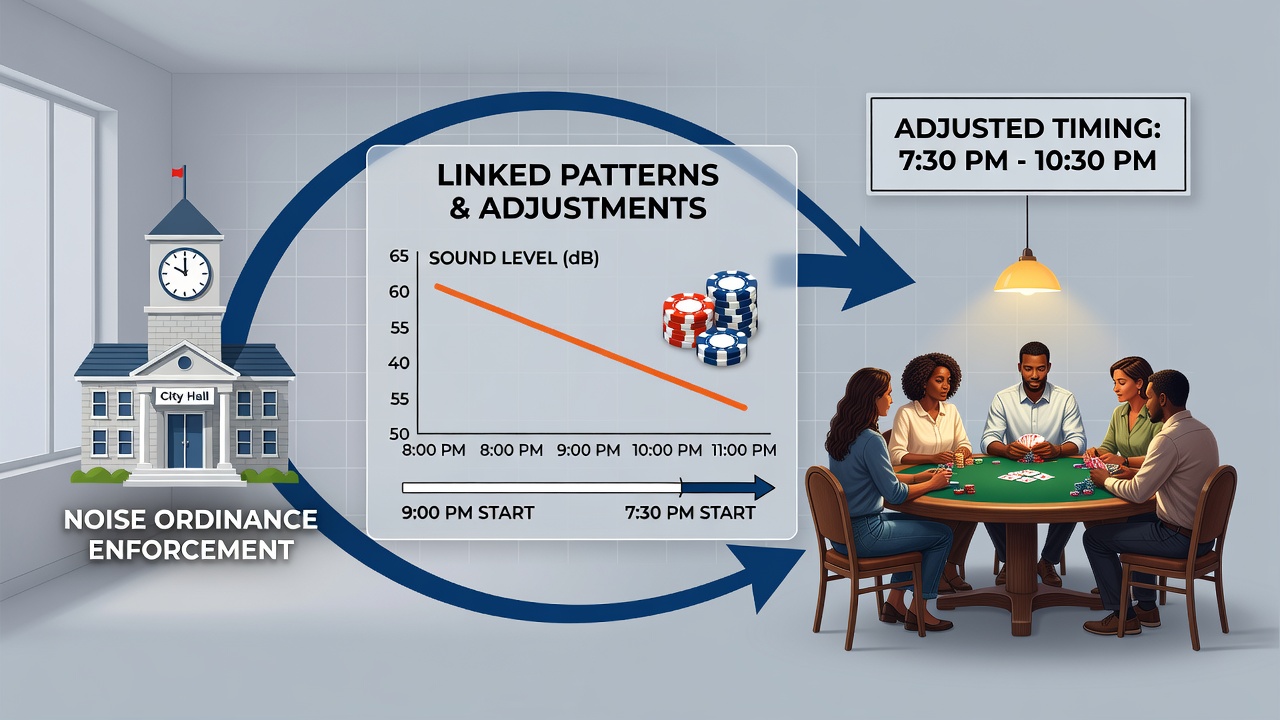
Analysis of session data reveals three recurring patterns. First, many venues advance the start of high-stakes evening games by 30 to 60 minutes to capture peak play before stricter limits activate. Second, operators shorten individual sessions from four hours to three while adding more frequent breaks that allow sound levels to drop temporarily. Third, some properties extend play into the early morning when ordinances permit higher volumes again, creating a split schedule that separates early evening tournaments from late-night cash games.
Figures from the Canadian Gaming Association indicate a 22 percent increase in pre-10 PM poker entries at urban locations following ordinance reviews in 2025, whereas post-midnight participation rose 14 percent in markets with graduated noise allowances. Venues achieve these shifts through targeted marketing that highlights adjusted start times and through loyalty program incentives that reward players who adapt to new windows.
Case Examples from Different Regions
Take one downtown Chicago property that moved its flagship $5/$10 no-limit hold'em games from an 8 PM start to 7:15 PM after updated sound monitoring requirements took effect. The change preserved average table counts while reducing complaints logged with the city’s 311 system by nearly half. In contrast, a Sydney venue extended its final session start to 1 AM once new data showed ambient street noise masked internal sounds during that window, and participation metrics remained stable across the transition.
European examples follow comparable trends. Venues in Frankfurt documented a move toward segmented evening blocks that end before 11 PM or begin after 1 AM, aligning with regional quiet-hour statutes. These adjustments coincide with broader industry reports showing stable or slightly increased overall poker volume when operators communicate changes clearly to regular players.
Data Patterns and External Factors
Studies compiled by the International Centre for Gaming Research at the University of Nevada, Las Vegas reveal correlations between ordinance enforcement dates and measurable changes in session timing across 18 tracked properties. The research highlights how venues in denser residential zones implement more aggressive shifts than those near commercial corridors. Additional variables include weather patterns that influence open-window conditions and concurrent events such as concerts that temporarily raise baseline noise levels.
What's interesting is how digital reservation systems now incorporate noise compliance alerts that automatically suggest optimal start times based on historical readings. These tools help operators maintain consistent table occupancy even as external rules evolve. Participation data continues to show players adapt quickly once new schedules stabilize, often within two to three weeks of implementation.
Conclusion
Municipal noise ordinances continue to shape evening poker operations in city-center venues through predictable timing adjustments that balance regulatory compliance with player demand. Patterns observed across multiple regions demonstrate consistent responses including earlier starts, segmented sessions, and extended late-night options where local rules permit. As June 2026 enforcement updates approach in several jurisdictions, operators rely on historical data and compliance monitoring to refine schedules further while maintaining operational continuity. These adaptations reflect ongoing coordination between gaming venues and municipal authorities to address both community standards and industry requirements.