Regional Festival Schedules Shape Virtual Table Game Timing Patterns
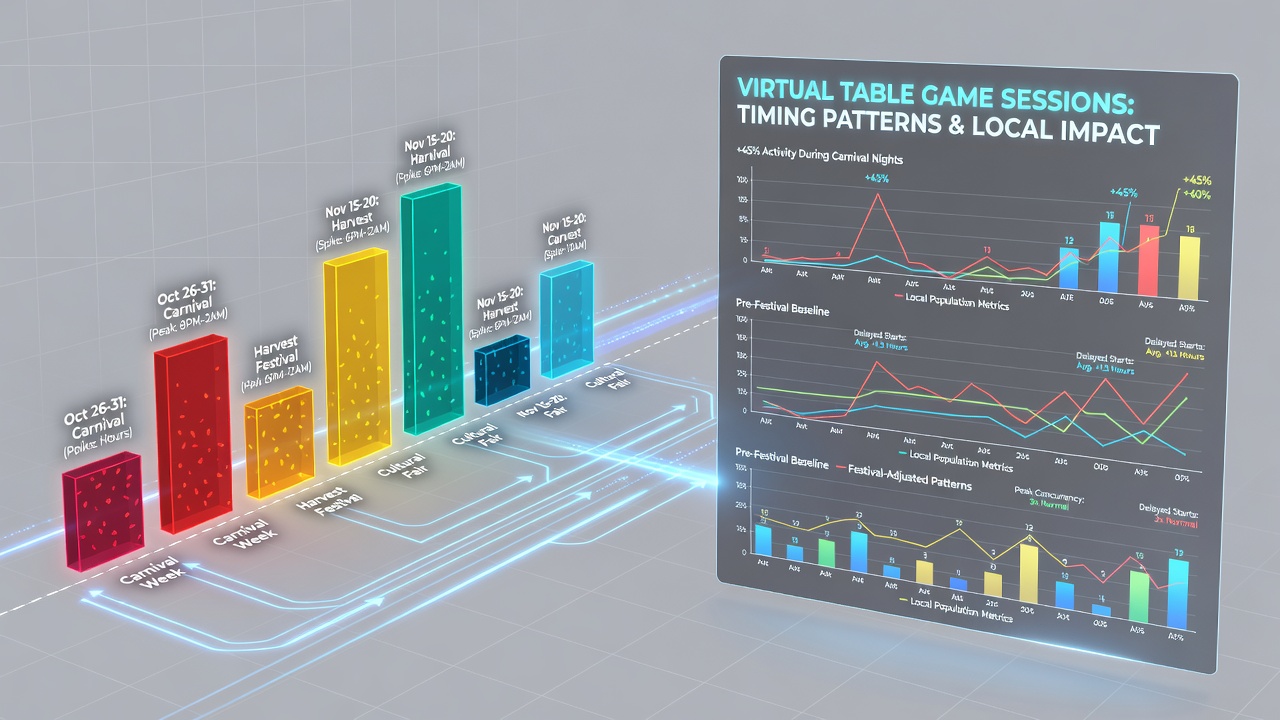
Regional festivals create distinct shifts in when local populations engage with virtual table games, and tracking platforms record these changes through session start times, duration logs, and peak activity windows. Data collected across multiple markets shows that events tied to cultural calendars move participation away from midday blocks and toward late evenings or post-event periods, while overall daily volumes remain stable in many cases.
Patterns Observed During Summer Events
July 2026 brings several large-scale festivals across North America and Europe that coincide with measurable adjustments in online table game access. Researchers tracking player logs note that communities hosting street fairs or music festivals experience a drop in afternoon sessions between 2 pm and 6 pm, followed by a rebound after 9 pm when events wind down. These adjustments appear in aggregated platform metrics rather than individual accounts, which allows analysts to isolate festival effects from broader seasonal trends.
North American Examples
In cities with established summer programming, session timing data reveals consistent delays. Players in festival zones log in later than residents in nearby areas without events, and average session lengths shorten by roughly 15 to 20 minutes during peak festival days. Platform operators report that table game variants requiring sustained concentration, such as poker and blackjack, show the clearest displacement, whereas quicker formats retain more consistent start times.
European and Asia-Pacific Comparisons
European markets display similar timing displacements during harvest festivals and regional carnivals, with data indicating a pronounced evening surge once public celebrations conclude. In parts of Australia, where winter festivals occur in July, analysts have documented parallel movements away from early afternoon access windows. A report from the Australian Gambling Research Centre highlights how community events correlate with altered engagement rhythms in digital card rooms, particularly among populations within a 50-kilometer radius of festival grounds.
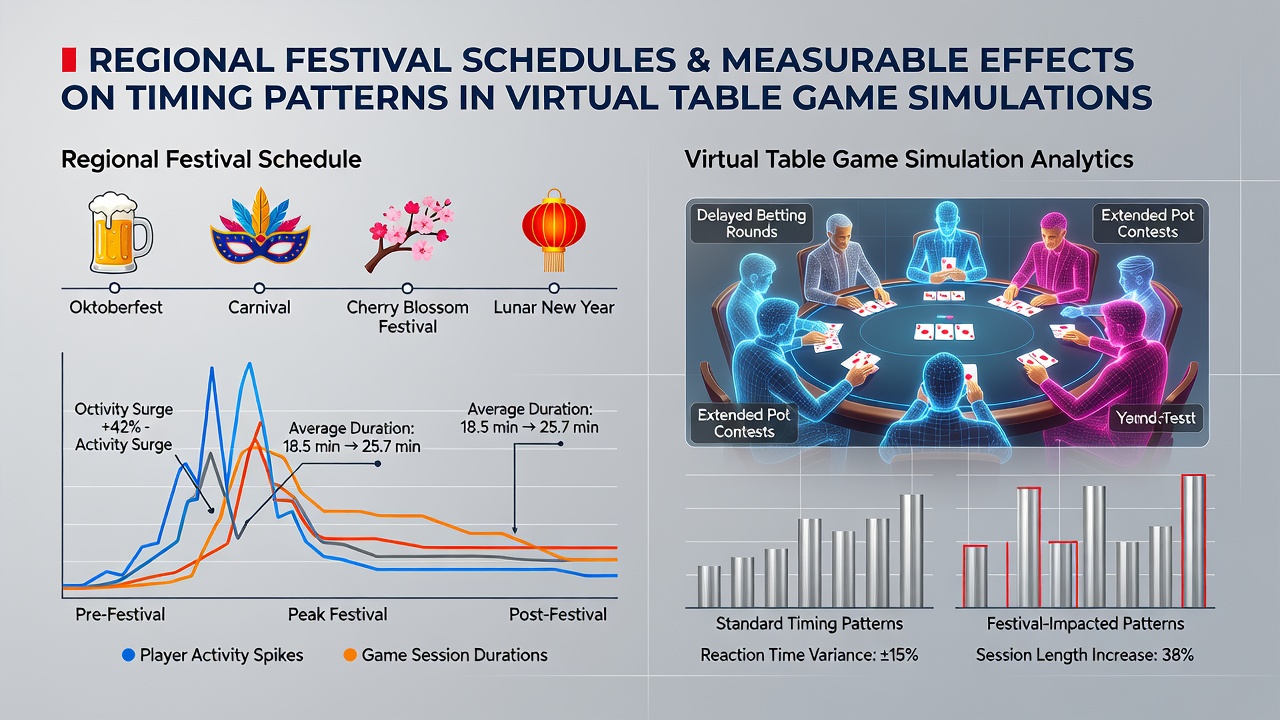
Cross-regional comparisons become possible because many operators use standardized timestamp formats that allow direct overlay of festival calendars onto activity graphs. The European Gaming and Betting Association publishes periodic summaries that include these overlays, showing how cultural events in one country produce effects that mirror those recorded in distant markets with comparable event structures.
Measurement Methods and Data Sources
Operators rely on anonymized timestamp aggregation rather than self-reported surveys to quantify these effects. Session initiation times are binned into hourly intervals, then compared against baseline weeks that lack major local events. Differences emerge most clearly in the tails of the distribution, where late-night clusters grow and midday clusters shrink. Academic teams at institutions such as the University of Nevada have cross-checked these platform datasets against public festival calendars, confirming that the observed timing displacements align with event schedules rather than random fluctuation.
Additional variables tracked include device type and connection duration, which help distinguish festival-related shifts from weather or holiday effects. When multiple festivals overlap in a single region, the combined impact on timing appears additive rather than saturating, suggesting that populations adjust schedules incrementally rather than abandoning sessions altogether.
Geographic and Demographic Variations
Urban centers with dense festival programming show sharper timing adjustments than rural areas, where events are spaced farther apart. Age cohorts also differ in their responses, with younger player groups displaying more pronounced evening shifts while older cohorts maintain steadier midday participation regardless of local events. These demographic distinctions surface consistently in datasets segmented by account registration details and IP location clusters.
Transit disruptions linked to festival road closures further influence access windows, pushing some sessions later when commuters reach home after extended travel times. Platform logs capture these secondary effects through delayed log-in spikes that coincide with estimated travel recovery periods rather than the festival start times themselves.
Conclusion
Regional festival schedules produce repeatable, quantifiable changes in virtual table game timing patterns across diverse populations and markets. The combination of timestamp aggregation, calendar overlays, and cross-regional validation allows researchers and operators to document these movements without relying on subjective reports. As festival programming continues in July 2026 and beyond, the same measurement frameworks will continue to map how local events reshape daily engagement rhythms in digital gaming environments.