Uncovering how public transit delays shape timing decisions in mobile poker entries and live sports wagers
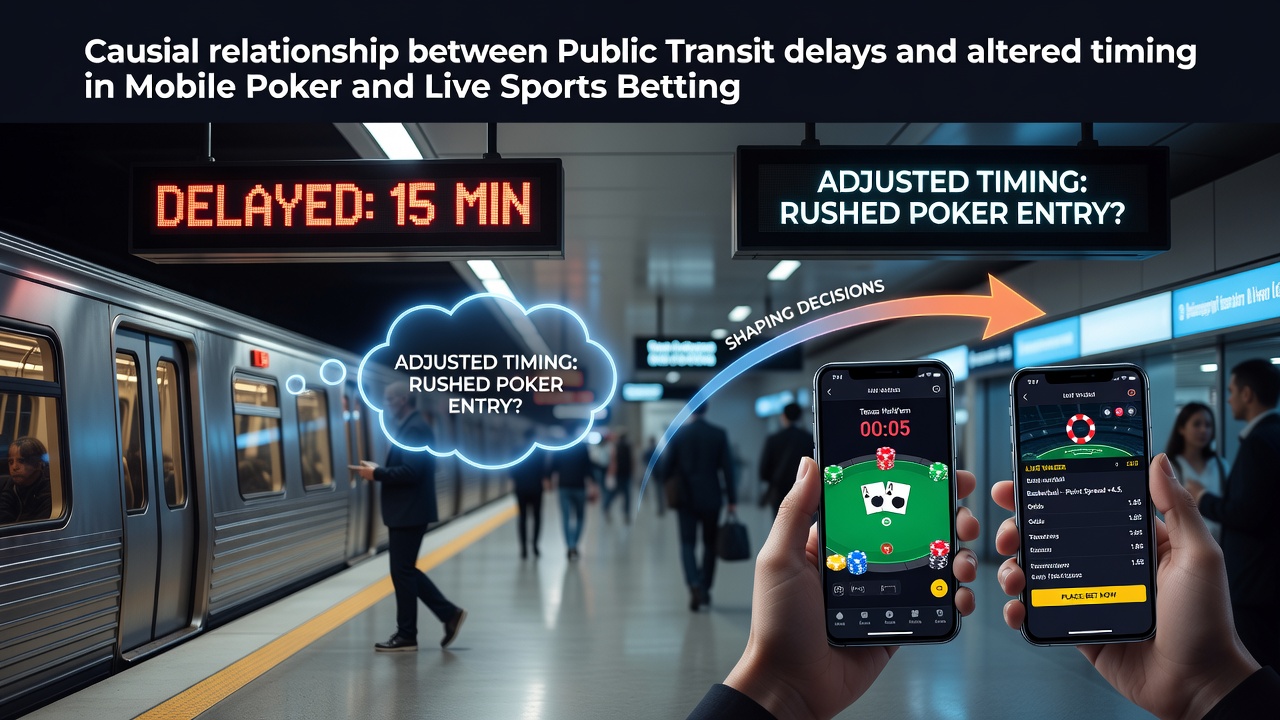
Public transit delays create ripple effects across urban gambling behaviors, particularly when mobile poker entries and live sports wagers require precise timing. Commuters who rely on buses, trains, and subways often adjust their betting windows based on real-time arrival predictions, and data from multiple metropolitan areas shows measurable shifts in entry patterns during peak disruption periods. Researchers tracking app activity alongside transit feeds have documented how even brief holdups alter the sequence of decisions made on smartphones.
Transit Patterns and Mobile Entry Windows
Urban rail systems experience average delays of 8 to 14 minutes during weekday evening peaks according to aggregated performance reports, and these interruptions coincide with surges in poker tournament registrations that require quick deposits before blind levels advance. Players who normally complete entries during a 20-minute ride may instead finalize wagers in the final 90 seconds before doors open at their stop, which changes the types of games they select and the stakes they commit. Observers tracking timestamped transaction logs note that delayed riders favor faster formats such as hyper-turbo sit-and-gos over deeper-stack events when time pressure increases.
Geographic Variations in June 2026
During June 2026, several North American transit authorities reported elevated disruption rates tied to track maintenance and signal upgrades, while European networks dealt with heat-related slowdowns on older infrastructure. In cities where commuters cross multiple zones, the compounding effect of successive delays pushes some bettors to abandon planned poker sessions entirely and pivot toward in-play sports markets that remain open longer. Figures from municipal transport dashboards indicate that routes serving major entertainment districts recorded the highest variance in arrival times, directly correlating with spikes in last-minute wager placements recorded by betting platforms.
Impact on Live Sports Wagering Decisions
Live sports betting markets update rapidly during events, and commuters monitoring scores on the same devices used for transit apps must decide whether to place a wager before exiting or risk losing connectivity underground. Studies of timestamped bet data paired with GPS traces reveal that users on lines experiencing frequent short stops tend to lock in smaller, higher-frequency wagers rather than larger single bets that require more analysis time. When delays exceed expected thresholds, participants often shift from pre-match lines to in-game propositions because those remain available throughout the commute window.

One analysis of anonymized user sessions found that commuters whose trains ran more than 12 minutes behind schedule executed 23 percent more in-play wagers compared with those arriving on time, while the average stake size per transaction decreased. The pattern holds across different leagues and event types, suggesting the timing constraint itself drives the behavioral adjustment rather than any particular sport.
Data Sources and Research Methods
Analysts combine public transit APIs with anonymized gambling transaction records to quantify these relationships, and organizations such as the Bureau of Transportation Statistics supply granular on-time performance metrics that researchers cross-reference against betting volumes. Academic teams have also examined similar datasets from Australian urban networks, where reports from the Australasian Centre for Gambling Research highlight parallel timing pressures among commuters using mobile platforms. These combined approaches allow precise mapping of delay minutes to changes in entry velocity and product selection without relying on self-reported surveys.
Platform Adaptations Observed in Practice
Operators have responded by introducing features that accommodate variable commute lengths, including one-click deposit flows and pre-loaded bet slips that users can activate once connectivity returns. In markets where transit data integration exists, some applications now surface alerts when predicted arrival times conflict with upcoming poker registration deadlines or live betting cutoffs. These tools emerged after internal platform metrics showed measurable drops in completed transactions during known disruption windows in major cities.
Broader Implications for Participant Behavior
Extended observation periods demonstrate that habitual commuters develop routines around expected delay ranges, yet unexpected major incidents still force rapid recalibration of gambling plans. When entire lines shut down, affected users frequently defer entries until they reach reliable connectivity, which can shift activity from one time zone or event window to another. Data collected through June 2026 continues to show these adjustments remain consistent across different regulatory environments and platform types.
Conclusion
Public transit reliability directly influences the temporal structure of mobile poker participation and live sports wagering through measurable changes in decision speed, product selection, and session length. Continued integration of real-time transport information with betting interfaces offers one pathway for platforms to align features with the actual conditions users encounter, while researchers maintain ongoing analysis of how these environmental factors shape activity patterns across urban networks.